
Special Report: Stress in the line of duty ~ CFD Part 3
By Mike BergerEditor’s note: Below is the third in a three-part series that examines how our local public safety officials cope with the stress that goes along with the job. The first two parts featured interviews with Canton police officers, and the third and final installment focuses on Canton firefighters. (Click here for Part 1 and Part 2)
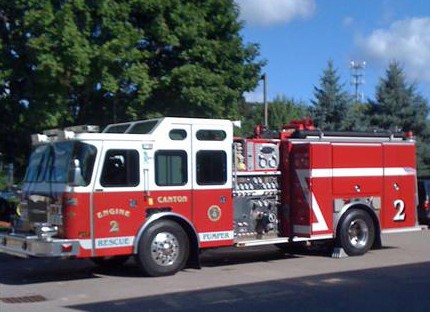 Every job comes with its own set of challenges, but the job of a firefighter is unique in that the challenges usually arise without warning, demanding quick thinking and immediate action — often in the face of life-or-death consequences.
As Canton Fire Chief Charlie Doody explained, firefighters can “go from zero to 60 in a matter of minutes, and when the call comes, you have to be really focused. One mistake could be bad for yourself or you could hurt someone.”
Last year, the Canton Fire Department responded to 33 fires and 4,211 emergency and public service calls, including an average of five to six medical calls and two to four accidents per day. The department also responds to hundreds of business alarms each year, numerous well-being checks and public assistance calls, and an average of one to two hazardous materials calls per month.
Unlike police officers, firefighters work and live in units for several days in a row, followed by consecutive days off. There is ample opportunity to talk with officers and fellow firefighters, which many identified as a key to combatting the stress that goes along with the job.
Those who were interviewed also mentioned humor, fitness, and family as outlets to help deal with stress. They also emphasized the importance of having a clear head when responding to an incident, knowing that every call is different and potentially serious.
Ultimately, both the firefighters and police officers accept the fact that they will see many difficult and painful cases throughout the course of their careers, including serious injuries and deaths. They understand that it is part of the job and they try not to get too close to each case; however, they still have sympathy for the victims and their families, treating each one as if they were their own.
Fire Chief Charlie Doody
Chief Doody has been a firefighter for 17 years, following in the footsteps of his father, Bucky Doody, who retired from the CFD after 37 years of service.
Doody said today’s firefighters not only must learn all of the basic firefighting skills; they must also be trained in emergency medical services — a requirement that took effect in 1999. Doody said half of the regular firefighters in Canton are certified EMTs while the other half are certified paramedics.
Fortunately, the state Firefighting Academy offers a free recruit training program that teaches all of the skills required of today’s firefighter, including life safety, search and rescue, ladder operations, water supply, pump operation, and fire attack. Still, Chief Doody tells each new recruit who comes out of the 12-week academy one basic rule that he learned from his father: “Listen a lot. If you think you know everything, you really don’t know.”
The academy, according to Doody, is very extensive and very regimented. “You feel like you have the knowledge and a good feel for the job,” he said. “But I tell everyone, listen to the guys doing their job and be a sponge.”
The academy not only offers classes dealing with stress management, but there are classes available for firefighters after specific traumatic incidents, in which a special team will visit the station and talk through the incident with the firefighters involved.
Doody acknowledged that it is part of the firefighter culture to keep everything inside and not show emotion or vulnerability. But he added that the department, the town, and the state fire marshal’s office are ready to step in and help those who need assistance.
The chief noted that all firefighters deal with stress differently. Some find an outlet in fitness and athletics, some play golf, and some turn to cooking or another hobby.
But the secret to success as a firefighter, said Doody, is having confidence in one’s ability to do the job, which stems from adequate training, having the best equipment, and being up to date on all procedures.
Lt. John Hutchinson
Lieutenant Hutchinson is a 15-year veteran of the Canton Fire Department, having previously served as both the fire prevention and education officer. He is often the commander at the Ponkapoag Station and has been on the scene for many highway accidents on routes 95, 128, and 24.
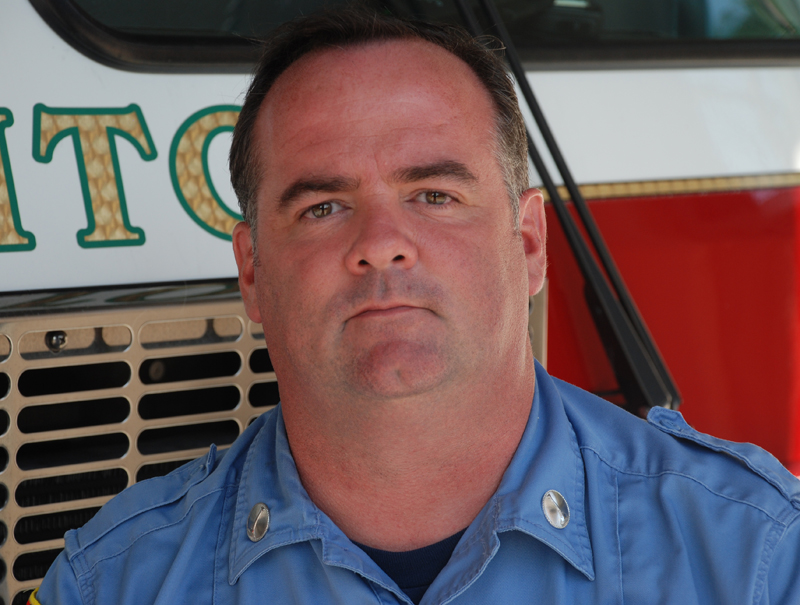
Lt. John Hutchinson
Recently, he was first on the scene of an accident in which a New York man ran a traffic light at the end of Dedham Street, crashing his pickup truck into a house on Washington Street.
According to Hutchinson, one of a firefighter’s best tools is training and preparation for all kinds of scenarios.
“I think in your mind, you have to be ready and reactive to things that may not happen,” he said. “Assume the worst-case scenario.”
Hutchinson said firefighters in Canton also benefit from the informal debriefing sessions that occur after each call or incident. “We ask ourselves what we could have done better or improve for the next incident,” he said.
Yet another tool that firefighters use to get through the day is humor. “Sometimes a joke will lighten the tension,” said Hutchinson.
With that said, he believes that many firefighters think about the victims and are sympathetic to the victims’ families.
Firefighter Tom Norton
A 16-year veteran, firefighter Tom Norton agreed that training and confidence are among the best tools firefighters can use to deal with stress. “The best way is our reliance on training,” he said. “That gives us confidence and [knowledge of] how to deal with each different scenario.”
Norton said that when a call comes in, the firefighters focus on the job at hand, “just like tunnel vision,” and each firefighter uses his experience and education to “do the job as best as he can.”
Firefighter Robert Lynch
Firefighter Robert Lynch is currently in his 18th year of service on the Fire Department. He said that each firefighter gets more comfortable with the job as the years go by, yet they also understand that every call will be different and challenging in its own way.
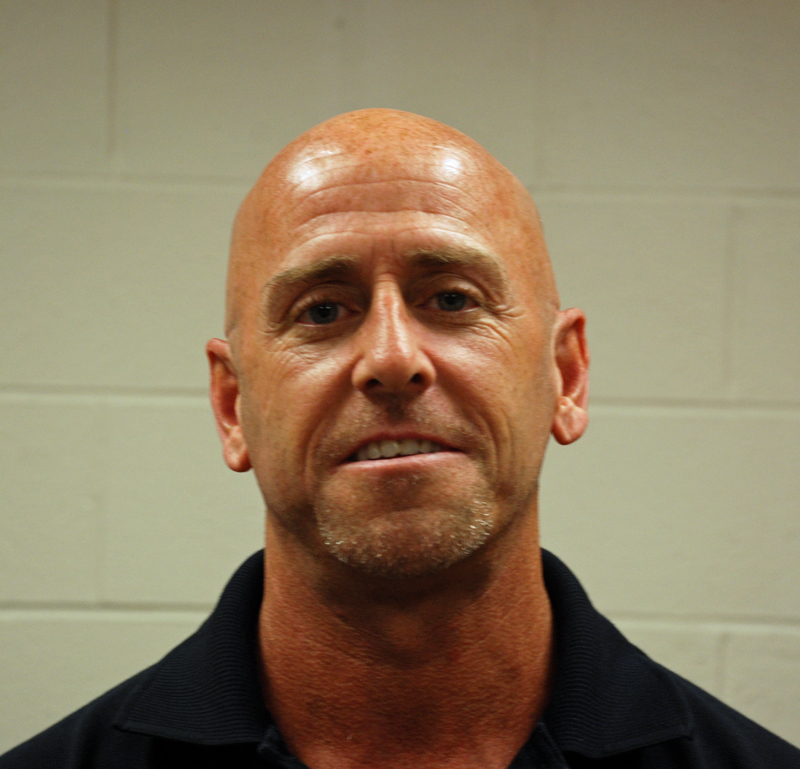
Firefighter Robert Lynch
“The best thing to do is put each call behind you,” he said. “You do the best job you can on each call and refocus on the next one.”
Lynch described his first year on the job as nerve wracking, but he remembers coming back to the station and talking with his fellow firefighters.
A Canton native, Lynch said some of the most memorable calls have been the ones involving families and victims that he knew personally.
Lynch said the biggest difference between now and when he began is the addition of emergency medical services. Before, private paramedics would respond to medical calls from Norwood Hospital, whereas now the firefighters are the first responders.
As for how he handles the daily stress of the job, Lynch said he prefers to “vent” and talk to other firefighters. “For us, it just comes natural,” he said. “It’s just a different kind of pressure we are under.”
Captain Dan Beal
A 26-year veteran of the Canton Fire Department, Fire Captain Dan Beal said every firefighter has his own way of coping with stress. Some talk to their fellow firefighters, while others rely on their sense of humor. For those critical incidents involving major fires with a loss of life, the department has a formal debriefing program ready to be implemented.

Captain Dan Beal
Beal vividly remembers one incident that bothered him for many years after. It was a house fire on York Street in which a woman was killed. A big issue at that time was the minimum manning levels per shift, and while the official report indicated that the woman would have died regardless of the manpower present, the death bothered Beal for a long time.
“It really bothered me as a young lieutenant,” he said. “To be honest, I was angry at the town. I know evidence showed there was no way we could have saved her. It was a political football. I was so upset, I did speak to a professional about it.” Soon after that incident, the town upped the minimum manning requirements.
Beal said the current generation of firefighters are better equipped to handle the variety of calls the department now receives, particularly in the area of emergency medical services. “I think the firefighters today are better trained and better prepared,” he said. “I am really amazed how far advanced the medical services and equipment is today. These guys are really good at what they do.”
Beal said it all starts with the fire chief, who is responsible for screening the applicants and finding the ones who can handle stress well. “This is a very important job,” he said. “People’s lives are in the balance.”
Short URL: https://www.thecantoncitizen.com/?p=16630


 Posted by Mike Berger
on Oct 10 2012. Filed under Featured Content.
Both comments and pings are currently closed.
Posted by Mike Berger
on Oct 10 2012. Filed under Featured Content.
Both comments and pings are currently closed.