
Black History Month at 100: More Than Remembrance
By GuestThe Canton Diversity, Equity & Inclusion Committee held its annual Black History Month celebration last week in the CHS library. The reflection below is by CDEI Chair Naomi Akan.
In 1926, historian Dr. Carter G. Woodson launched Negro History Week to address a glaring omission: Black Americans were largely absent from the nation’s history books. Woodson understood that a democracy cannot function fully when the contributions of an entire people are ignored or distorted.
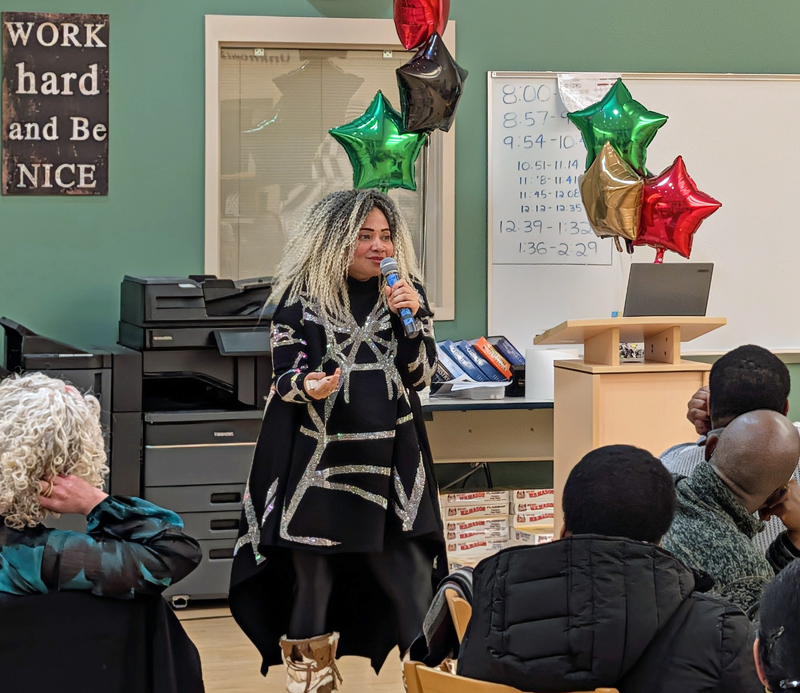
Dr. Angela Burke gives the keynote address at this year’s Black History Month Celebration.
One hundred years later, the 2026 Black History Month theme, “A Century of Black History Commemorations,” marks the centennial of that bold initiative. What began as a week evolved into a month of national recognition. But this milestone is not simply an anniversary. It is a moment of reflection and resolve. Black History Month was born out of resistance to erasure. In many ways, that resistance continues today.
From early observances like Jubilee Day, Watch Night services, and Juneteenth celebrations to today’s nationwide commemorations, honoring Black history has always been more than symbolic. It has been an act of affirmation, education, and empowerment. These commemorations have helped shape identity, foster pride, and challenge narratives that excluded or minimized Black contributions to our shared story.
Yet at this 100-year mark, history itself feels contested. Across the country, books are challenged, curriculum standards debated, and conversations about race labeled “divisive.” When the honest teaching of history becomes controversial, we must pause and ask why.
Black history is American history. It is the story of innovation and entrepreneurship. It is the story of cultural brilliance that reshaped music, literature, and art worldwide. It is the story of civic leadership that expanded democracy and opportunity. It is also the story of resilience, of communities who persevered and thrived despite laws and systems designed to exclude them.
Teaching this history truthfully does not divide us; it strengthens us. It provides students with a fuller understanding of the nation they inherit and the responsibilities they carry. In classrooms across the country, educators work to tell a more complete story, one that acknowledges both progress and injustice.
Black history cannot be confined to a single unit in February or reduced to a handful of familiar names. It is woven into every chapter of our national development. When students learn about the contributions of Black scientists, inventors, artists, organizers, and educators, they gain a deeper and more accurate understanding of American history. Black students see themselves reflected in narratives of achievement and leadership. All students benefit from a broader perspective that fosters critical thinking and empathy.
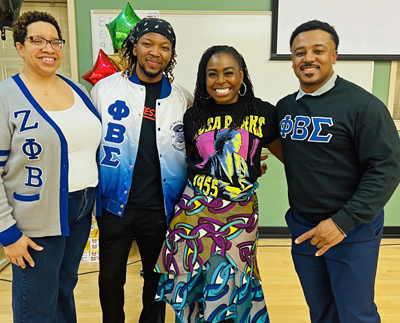
Tia Daly, president of Zeta Phi Beta Sorority; Jestin King, CDEI vice chair; Naomi Akan, CDEI chair; and Marcus Brown, director of social action for Phi Beta Sigma
At its core, Black History Month is about recognition — and recognition is essential to democracy. A nation committed to liberty and justice must be willing to confront its full story, not just the comfortable parts.
This centennial year reminds us that commemoration is not passive. It is purposeful. Preserving Black history in an era of misinformation and politicized narratives is not nostalgia — it is protection. It safeguards students’ right to learn, protects communities’ right to tell their stories, and upholds the integrity of education as a space for truth.
As we mark 100 years since Dr. Woodson’s visionary effort, we should ask what the next century of Black history commemoration will require of us. Will it remain necessary because inequities persist? Or will it evolve because we have fully integrated this history into the everyday fabric of how we teach and understand our nation? That answer depends on our collective commitment. Black History Month at 100 is more than remembrance. It is a reaffirmation that truth matters. It is a reminder that education remains one of the most powerful tools for building a more just and informed society. And it is a call to ensure that history is neither sanitized nor silenced, but shared honestly and courageously.
A century ago, Black History Month began as a corrective. Today, it stands as a testament. The next chapter, one that honors the past while shaping a more equitable future, is ours to write.
Short URL: https://www.thecantoncitizen.com/?p=133566


 Posted by