
Invasive Species Alert: Mile-a-Minute
By GuestBy Jared Penta, Canton Conservation Ranger
Last year we covered Japanese knotweed and how that invasive species was abundantly present here in Canton. We hope all of you have helped in the effort of removing that plant, but unfortunately there is another to look out for as well.
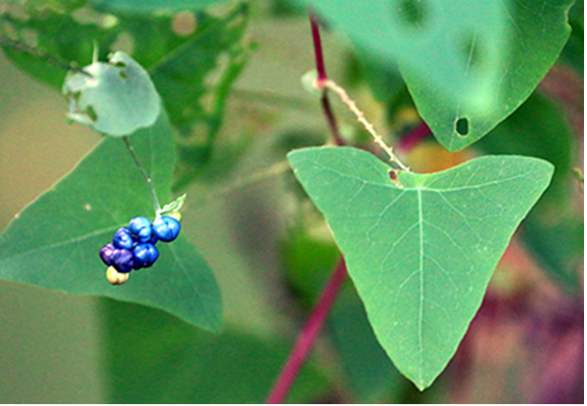 Mile-a-Minute weed, or Asiatic tearthumb, is an incredibly fast-growing plant native to Eastern Asia. Arriving in Massachusetts in 2006, there are at least 50 reported infestations of Mile-a-Minute in our state, and Canton is one of them. It is widespread throughout the Fowl Meadow along the Neponset River, an area that is part of the Fowl Meadow and Ponkapoag Pond Area of Critical Environmental Concern.
Just recently, this plant was found and removed from Pequitside Farm. This plant can grow up to six inches a day, making it immensely important to catch early on, before it can fully establish. Mile-a-Minute dies after a frost, but seeds can persist in the soil for up to six years, and they float in water so move quickly through wetlands, which is why we believe the Fowl Meadow is so impacted. If you find it, it is normally very easy to pull from the ground with just your hands, although gloves are advised as it has small thorns on its stem.
This plant is fairly easy to identify, as its leaves are almost perfect light green equilateral triangles. The stems are thin and can be green to reddish. Numerous small, curved thorns jut out from these stems. The fruit that it bears look like blueberries, though smaller. Another key trait is a saucer-shaped leaf that appears at stem nodes. Mile-a-Minute comes with all the standard issues of invasive species, where it outcompetes natives and grows in dense mats, blocking out others, both of which can devastate an ecosystem.
As previously stated, hand pulling can work in many cases if there is just a small invasion. Pulling or cutting this plant back should occur before June, as that is when seed production starts. For herbicide use, triclopyr works for post-emergence weeds. Pre-emergence methods can also work, with chemicals like prodiamine, although the timing is very specific. Please consult with a licensed professional before spraying any herbicide and note that using herbicides in a wetland area requires a permit from the Conservation Commission.
Catching this plant early on is key to preventing a full-on invasion. Japanese knotweed is already very dominant in many areas around town, and letting another invasive species get to that level could cause major problems. The Conservation Commission will be on high alert for this species on conservation land, and it is incredibly helpful if landowners are as well.
Short URL: https://www.thecantoncitizen.com/?p=132225


 Posted by Guest
on Aug 21 2025. Filed under Featured Content.
Both comments and pings are currently closed.
Posted by Guest
on Aug 21 2025. Filed under Featured Content.
Both comments and pings are currently closed.